
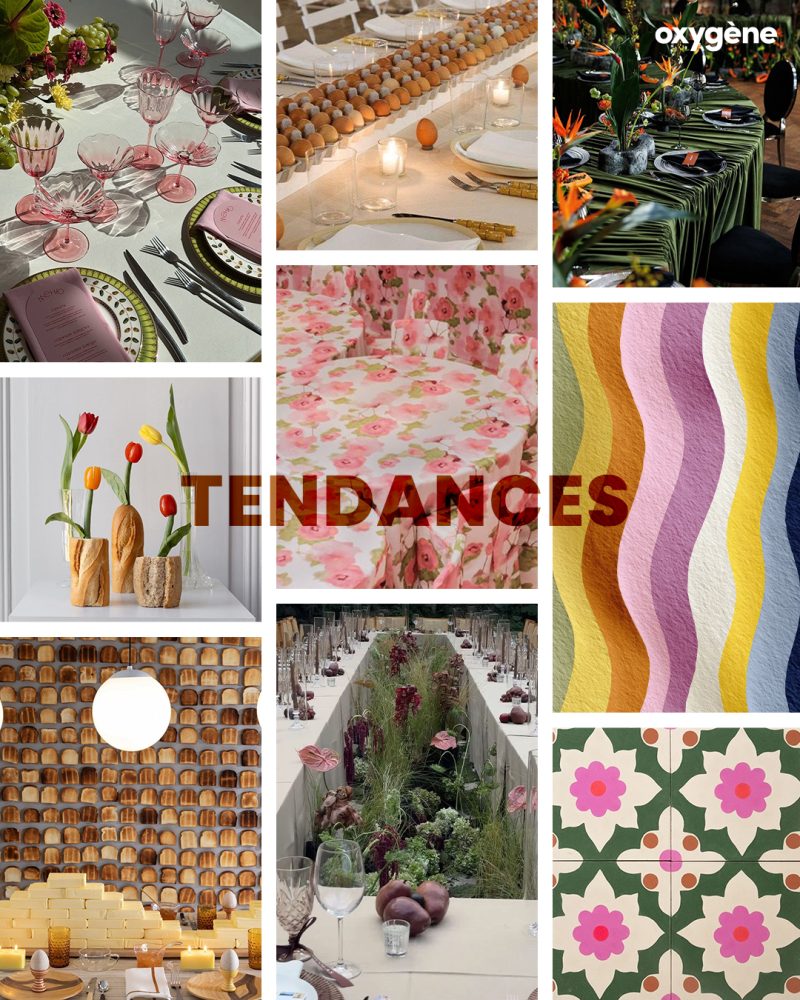
This year, creativity is taken to new heights. As the event industry continues to evolve, we have identified four key trends that we believe will be at the heart of the most striking concepts.
Maximalism
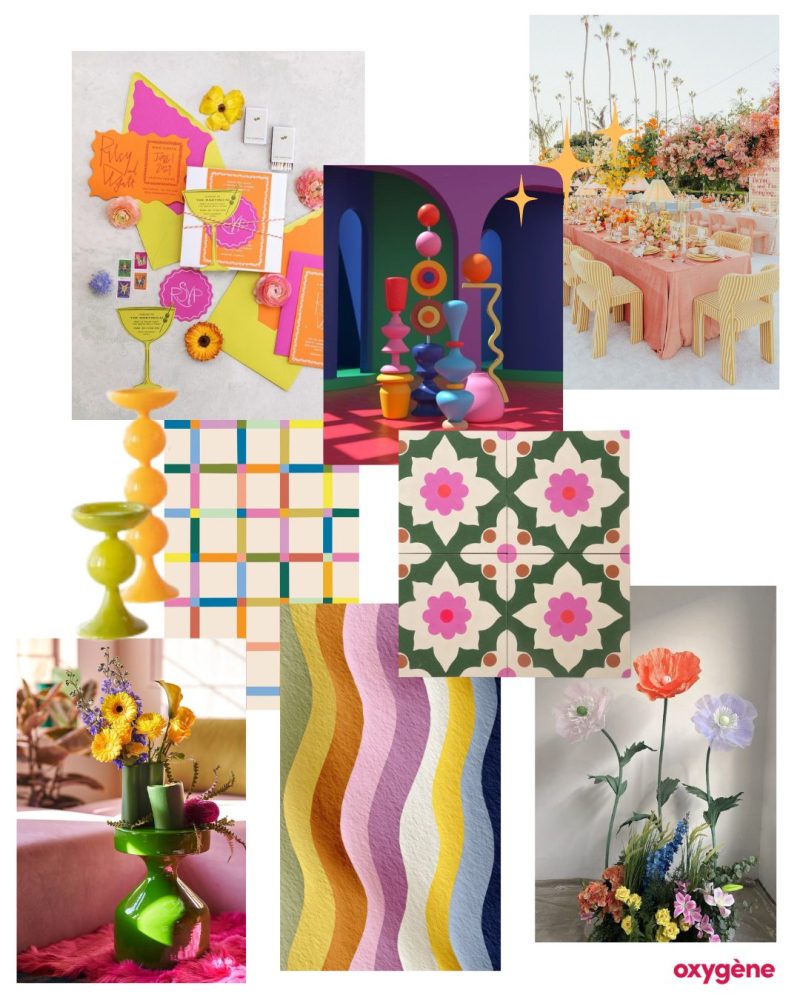
The maximalist trend emerges as a defining trend in 2026, responding to the clean, feminine aesthetic that shaped fashion and design in 2025. This style captures attention through its bold use of vibrant colors and juxtaposition of patterns and shapes, giving your space a palpable energy.
To create a maximalist style that instantly captivates the room, these are the key elements shaping 2026:
XXL flowers: Flowers are no longer reserved for use as centerpieces. They become oversize objects, moving and living in the space to create strong visual scenes.
Whether framing a photo booth or adding height and drama to lounge areas, larger-than-life florals create powerful visual moments.
Bold color combinations: the use of vibrant colors and bold contrasts energizes the decor. While pastel shades refresh the space, contrasting color combinations set the tone for the designs. The watchword is clear: energy. Your guests want to feel joy and be transported by their surroundings.
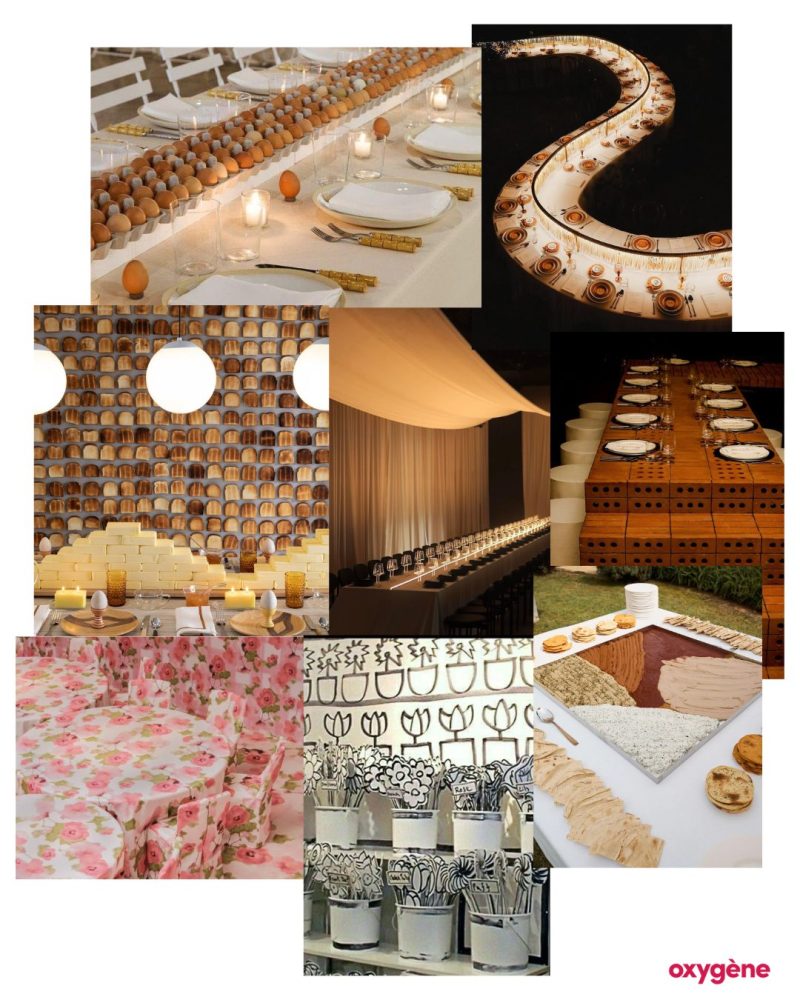
Irregular shapes: furniture becomes a decorative feature in its own right. Choosing furniture in a variety of shapes, transform the space and can create a common thread between all the elements of the concept, while reinforcing the visual identity of the event.
Graphic communication media: printed materials are no longer secondary. Graphic design plays a key role and must be considered from the conceptualization phase onwards. Menus, seating plans, invitations, and displays become opportunities to add color, bold typography, and spread your message, enriches the decor and gives it character for a more complete and immersive experience.
Maximalism celebrates abundance. Through layered textures, colors, and patterns, it creates visually stimulating spaces that leave a lasting impression.
Texture
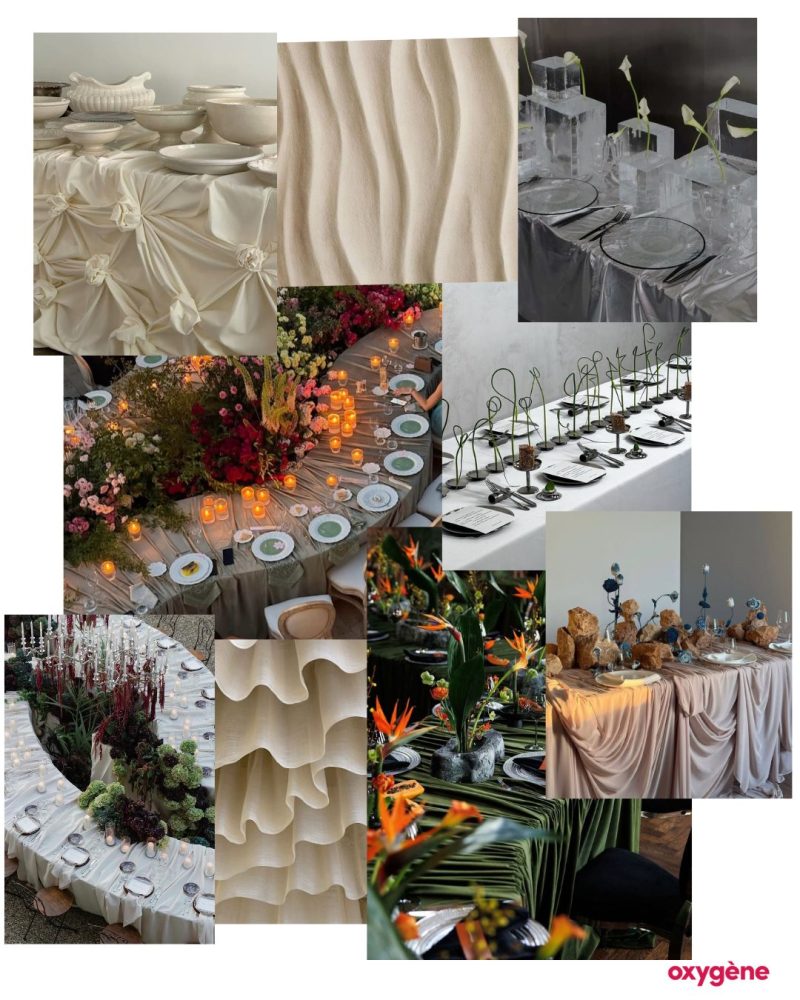
In 2026, texture is no longer a mere detail; it has become a design language in its own right. In a world dominated by digital technology and smooth surfaces, guests crave tangible sensory experiences.
On the catwalks of the major fashion houses, fabric is at the heart of the collections: hyper-transparency with lace and silk, the return of fringe, and the assertive presence of leather. Texture is definitely in.
Here are a few ideas for incorporating texture into your spaces:
Tablecloths: no longer just used to cover the table, they can be manipulated to create volume and patterns. Knotted, draped, or arranged in a sculptural manner, to become a key element of the decor.
Raw materials: stone, metal, and wood, in all their forms, are featured in the creation of centerpieces and furniture. These materials bring authenticity and character, whether used in a minimalist or more expressive way.
Curved lines: Organic shapes soften the space and capture attention. From cascading greenery in free-form vases to flowing ceiling drapery, curves introduce motion and serenity.
Textures thus become an exploration of materials and surfaces that engage touch, light, and perception. They anchor the experience in reality and transform touch into a true luxury.
Art of the table
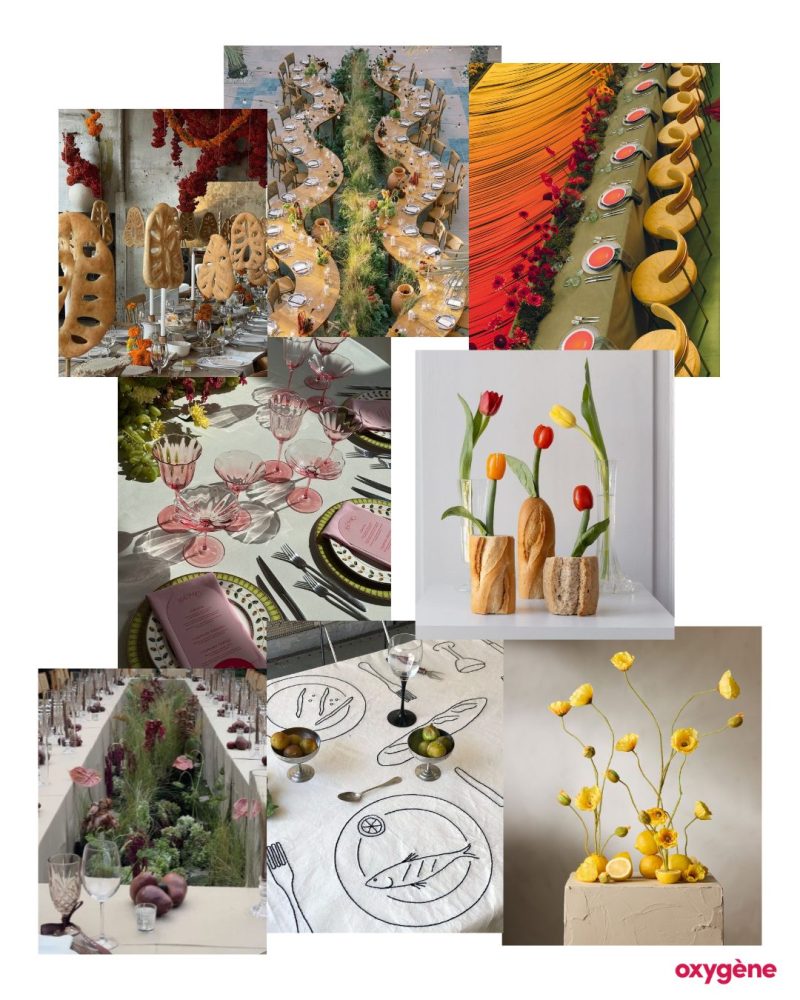
The table is no longer strictly functional; it has become an immersive setting with its own narrative. As the focal point of the guest’s dining experience, it directly influences the atmosphere, photos, and overall satisfaction. Unsurprisingly, tablescape content continues to dominate social media.
Here are a few tips to make your table the focal point:
Redesigned centerpieces: uniformity is a thing of the past. Identical floral arrangements on every table are a thing of the past. In 2026, everyday objects are repurposed for decorative use. Fruit, food, and everyday objects become bold, sculptural centerpieces.
Horizontal and narrative display: the centerpiece is no longer limited to a fixed point. It extends in length and width, to structure the space. This approach allows for richer, more immersive compositions.
Playful dimension: incorporating objects that can be handled, shared, or eaten into the table decor creates engaging sensory experiences. Mealtime becomes a real moment of sharing worth lingering over.
Handcrafted tableware: Vintage or handcrafted tableware continues to appeal. Each piece adds a unique touch and makes it easy to personalize the table while adding color and character.
The table becomes a space for visual and sensory expression. It is no longer a simple support, but a proper stage for beauty.
Experiential
This analysis of event trends for 2026 converges on a clear theme: experientialism.
Events are no longer experienced as a place to occupy, but as an immersive experience designed to be felt, lived through, and remembered. Light becomes a narrative tool, capable of transforming a space throughout the evening and changing the atmosphere without moving guests.
The sensory journey
The senses play a central role in the perception of an event. Smell and light are powerful levers that are too often underestimated. Smell is the only sense directly connected to the emotional brain. Diffusing a signature scent in a space instantly anchors an atmosphere and provokes an immediate emotion in guests.
Immersive decor
Curtains play a central role in experiential design. Draped over walls or suspended from the ceiling, they structure the space, create movement, and redefine volumes. In 2026, they will also become a tool for temporary partitioning, allowing you to guide traffic, create intimate areas, and transform a venue according to the highlights of the event.
A holistic vision
In summary, experiential design is based on a comprehensive approach to event planning. Decor, lighting, sound, and guest flow come together to create a cohesive, immersive, and enveloping universe that leaves a lasting impression.